TIFFEN FILTERS
Custom Black & White Kit
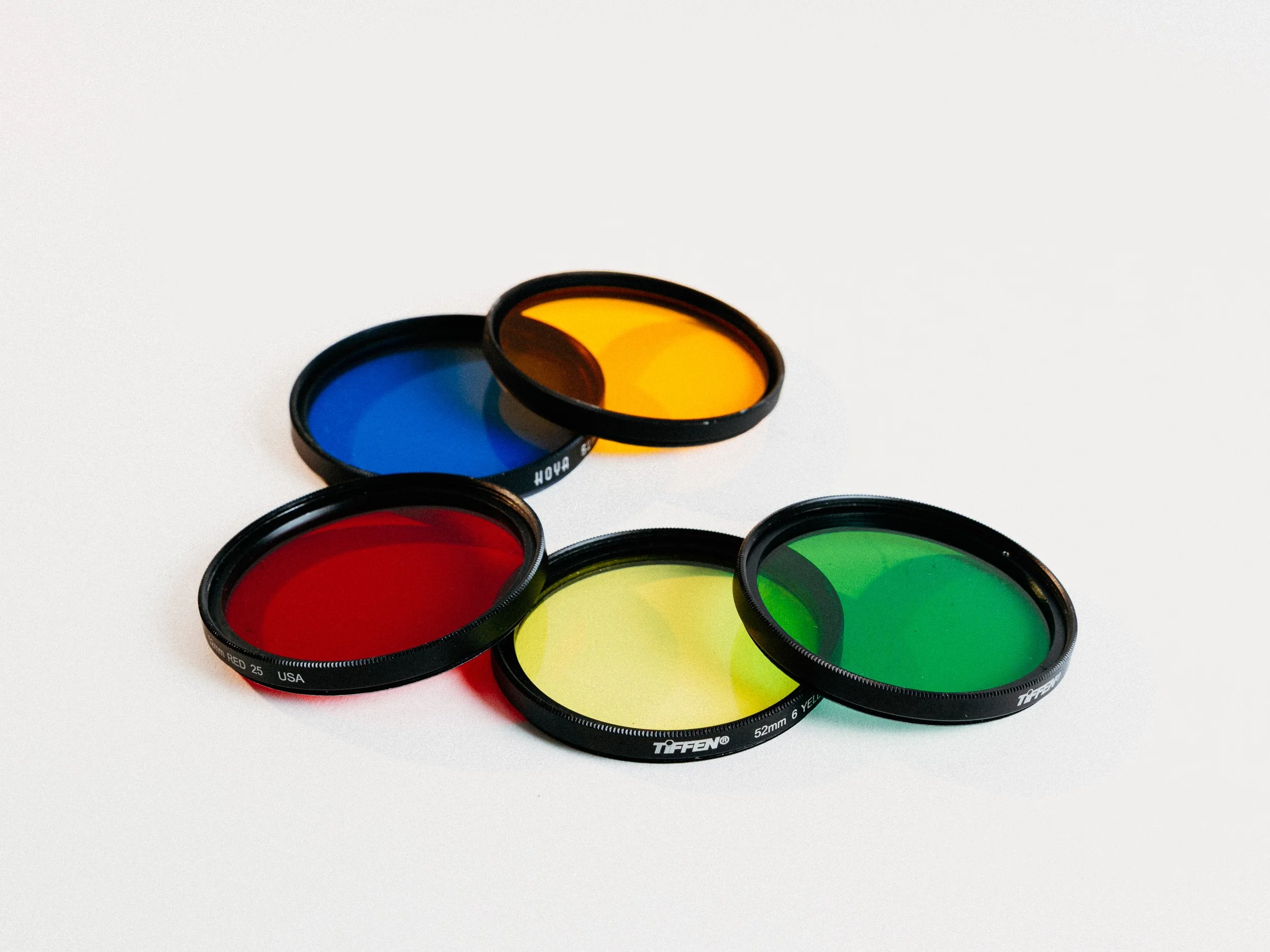
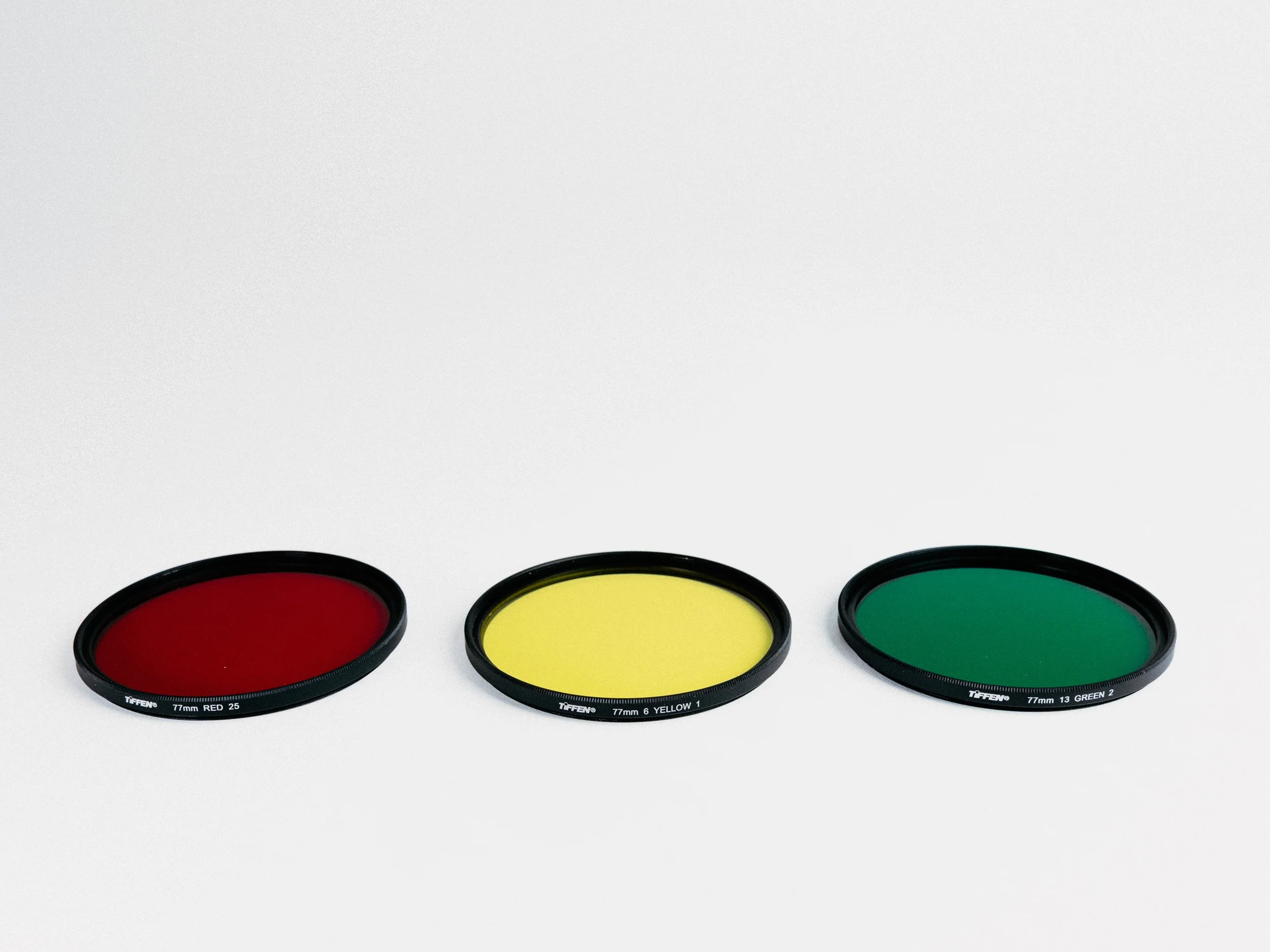
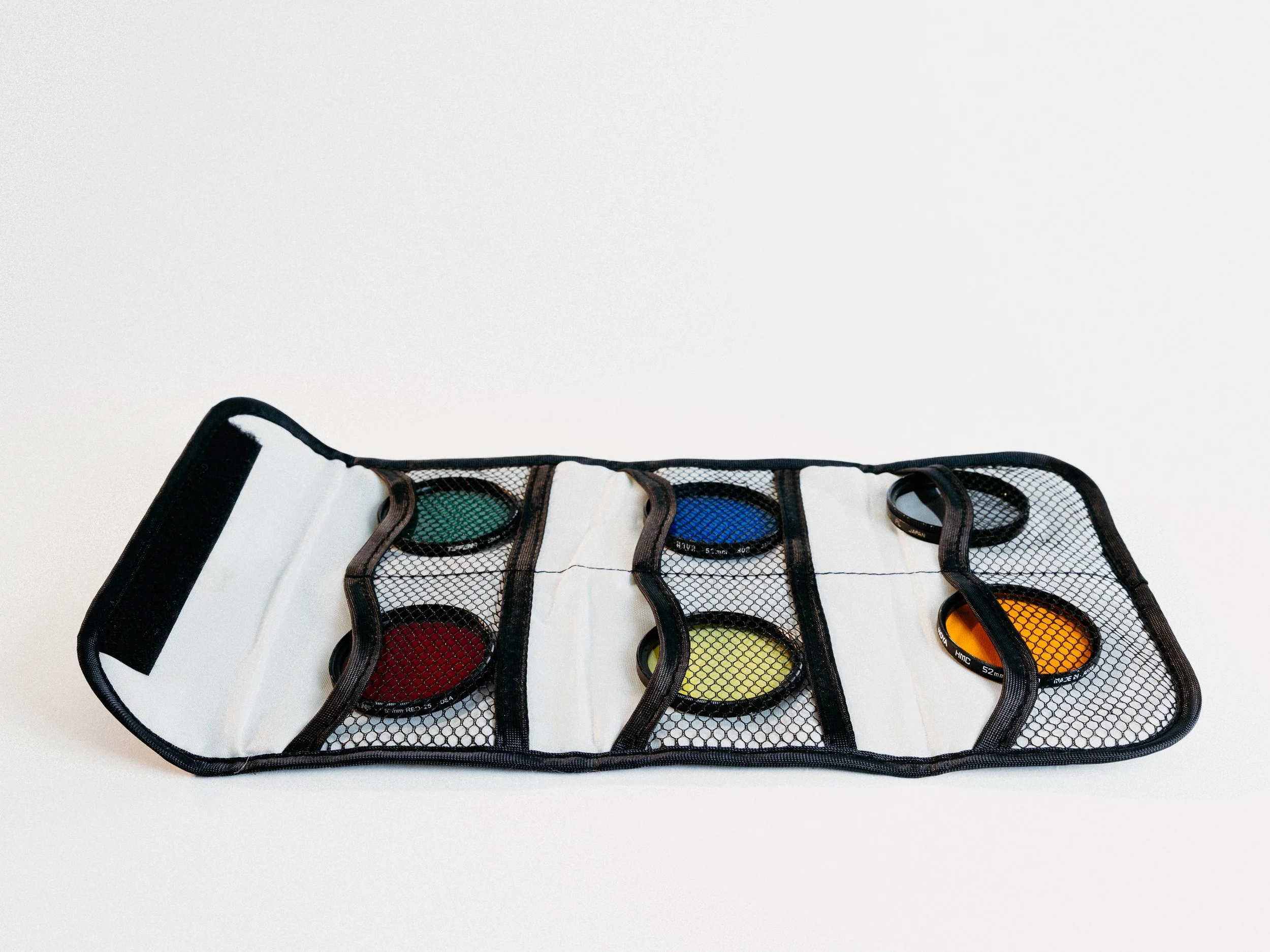
Custom TIFFEN Black & White Filter Kit
-
Colour filters designed to shape contrast in black-and-white film photography.
Useful for controlling skies, clouds, skin tones, foliage, fog, and subject separation.
Available in multiple filter thread sizes for different lens systems.
Tiffen ColorCore glass construction with metal filter rings.
Works for monochrome film, black-and-white digital work, and some colour-correction use cases.
Ten-year warranty from Tiffen.
-
The Tiffen Black and White Filter Kit is one of the easiest ways to start taking monochrome work more seriously. Colour filters change how panchromatic black-and-white film translates colours into grey tones. A red filter can darken a blue sky and make white clouds pop. A yellow filter gives a subtler contrast lift. A green filter can separate foliage and skin tones. A blue or 80B-style filter can reduce contrast and soften a foggy or winter scene.
I have used colour filters for black-and-white photography for over ten years. You do not need every colour in every strength and every thread size, but having a small set gives you room to experiment and learn what actually fits the way you shoot. The Tiffen kit is practical because it gives you a few useful options and is often cheaper than buying each filter separately.
For most photographers, yellow is the safest starting point. It adds a light contrast boost without making the image feel too dramatic, and it can also make skin tones feel a little cleaner. Orange and red are stronger choices for skies, clouds, and landscape work. Green can be useful for foliage and portraits, especially when you want more separation in outdoor scenes.
The important thing to remember is that every filter blocks some light. If you are using a camera with TTL metering, it should usually compensate through the lens. If you are using an external light meter or a fully manual workflow, you need to account for the filter factor yourself.
I own more filters than the standard kit, across different thread sizes for different camera systems, but you do not need to go that far at first. Start with the thread size that matches the lenses you use most, or buy one larger size and adapt it with step-up rings. See the buying guide below for the filters and sizes that make the most sense.
The Good:
Excellent tool for shaping black-and-white contrast in-camera.
Still made by Tiffen and available in several common sizes.
Useful for monochrome film photography and creative digital black-and-white work.
Helps you understand how panchromatic film responds to colour and light.
The kit format is often more affordable than buying individual filters.
The Bad:
You need to slow down and think before swapping filters.
Filter factors matter, especially with external metering.
Carrying several thread sizes can get messy quickly.
A magnetic version would be nice, even if that is probably wishful thinking.
-
Get it if you shoot a lot of black-and-white film and want more control over contrast.
Get it if you are not sure which colour filter to start with; the Tiffen kit is a good all-around entry point.
Get it if you want to better understand how film renders skies, foliage, skin, haze, and clouds.
Pass if you are always moving fast, photographing multiple subjects, and do not want to swap filters.
Pass if you prefer the untouched, default look of a film stock.
-
Light Yellow #6: A gentle contrast filter for black-and-white film. It gives a small lift to skies, clouds, and general separation without becoming too obvious. If a scene feels flat but you do not want a dramatic filter effect, this is a safe place to start. I mostly use it when light starts to dim the red filter is too dark.
Green #13: Useful when you want more separation in foliage, plants, and outdoor portraits. Green filters can lighten green subjects and change how skin tones separate from natural backgrounds, making them helpful for portraits, forest scenes, and vegetation-heavy compositions. Also great for portraits of people with freckles!
Orange #21: A stronger contrast filter that darkens blue skies and adds more punch than yellow. It is useful for landscapes, coastlines, aerial views, water, and scenes where you want clouds and skies to separate more clearly without going as extreme as red. To me this the best all rounder if I were to only use a single filter for monochrome work, that would be it.
Red #25: The dramatic option and my favourite one for landscape photography. Red strongly darkens blue skies, cuts through haze, and can create high-contrast landscapes with bright clouds and deep skies. It can also be useful with infrared film for very strong effects. Expect a significant exposure penalty, often around three stops. If one day if you yourself high in alpine terrain with clean sky and bright snow, use a red filter and thank me later.
80B Colour Conversion Filter: Technically, this is a cooling filter made to use daylight-balanced film under warmer tungsten light by shifting the colour temperature toward daylight. However for monochrome work, I find it useful to lower contrast, on winter days, in fog, or in softer coastal conditions where I do not want the scene to become too punchy.
52mm threads: A good fit for many older manual Nikkor lenses and some Canon FD lenses.
55mm threads: Common for many Rokkor lenses, but harder to find. I purchased the 58mm instead and use step-up or step-down rings.
58mm threads: Useful for many non-L Canon EF lenses, including most USM primes.
72mm threads: Useful for many Canon EF L prime lenses.
77mm threads: Useful for many Canon EF L zoom lenses, though not every zoom shares this size. Check your lens before buying.
Discover past reviews & guide